
Field notes on
connectivity engineering
Commentary and methodology from our practice — on bearer migration, architecture, procurement and the commercial realities of running a device estate at scale.
BEARER MIGRATION
4 BRIEFINGS
The 2G/3G sunset is not a network event — it's an estate event
Operators frame switch-off as a date. For a device estate it is a coverage, power and lifecycle problem that starts years before the mast comes down. Here is how to sequence the migration without stranded devices.
READ →
Lessons from the 2G/3G Sunset for the Next Bearer Transition
The next bearer transition will look like the last one unless the lessons are written down. The estate that remembers the sunset migrates earlier and cheaper.
READ →
Migrating a Live Estate Without Losing Visibility
Moving an estate onto a new bearer without dropping visibility is a cutover problem, not a procurement one. Continuity of reads is what makes the migration safe.
READ →
Module Swap or Meter Swap? The Hardware Decision Behind Every Bearer Migration
Behind every bearer migration is a hardware decision: swap the module, or swap the meter. The right answer is set by access, cost and what else needs replacing.
READ →ARCHITECTURE
4 BRIEFINGS

Smart Metering as a Service (SMaaS)
A fully managed service architecture that removes deployment complexity and shifts ownership of the metering platform to a specialist provider.
READ →

SMaaS vs Utility-Owned AMI: Which Model Creates More Value?
Comparing service-led and utility-owned architectures across capital, operational responsibility, scalability and risk.
READ →
What Is the Best Architecture for My Smart Metering Programme?
The honest answer is 'it depends'. Four factors — scale, complexity, regulation and trajectory — narrow the field more than any vendor comparison.
READ →

Architectural Drift: How Point Solutions Quietly Undermine the Original Design
Every point solution bolted onto an estate pulls it a little further from the design it was procured against. Drift is how a coherent architecture quietly stops being one.
READ →AI & AUTOMATION
4 BRIEFINGS
The Use of AI in Deployments
How AI can be used to improve the overall delivery of connected devices — catching problems earlier and routing resources better across a multi-year rollout.
READ →

The Use of AI within the Manufacturing and Specification of Smart Devices
How AI improves the manufacture of smart meters and grid devices — and closes the loop between field failure and the next generation's specification.
READ →

The Use of AI in Network Balancing
How AI can be used within the smart grid to balance supply and demand across millions of variable assets — forecasting and coordinating faster than the old tools could.
READ →

AI-Driven Anomaly Detection: Catching Faults, Theft and Loss Before They Compound
Pattern recognition across millions of reads can surface theft, faults and network loss long before manual analysis would — if the output is treated as a lead, not a verdict.
READ →CONNECTIVITY
6 BRIEFINGS
The Rise of Multi-Bearer Connectivity in Utilities
No single bearer covers a whole estate well. Multi-bearer is now an architecture decision, not a fallback.
READ →
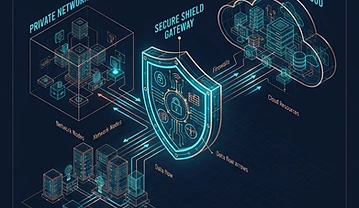
Private APN, Public Network or Hybrid Connectivity?
The choice trades control against cost and reach — and it's really about where the trust boundary sits.
READ →
Dormant SIMs and Ceased Devices: The Silent Billing Leak
Most organisations are paying for devices that no longer exist or communicate. How to find the dormant SIMs and ceased meters still billing, and close the leak without disconnecting the wrong estate.
READ →

eSIM and iSIM for Utility Estates: What Actually Changes
Remote SIM provisioning changes what a device on the network even means for an estate — and shifts where the lock-in, the flexibility and the risk actually sit.
READ →

The Standards Stack Behind the Smart Grid
OCPP, OCPI, ISO 15118, OpenADR and HEMS don't compete — each covers one interface in the chain between a vehicle and a DNO's control room. None can substitute for another.
READ →

The 99% Charger: Reliability Is Now a Data and Operations Problem
A 99% network average is a poor predictor of whether the charger in front of you works. Reliability is now a whole-stack data and operations discipline, not a headline percentage.
READ →COMMERCIAL
5 BRIEFINGS

From CAPEX to OPEX: The Changing Economics of Smart Metering
Moving from capital to operating models doesn't reduce cost — it redistributes it. The honest comparison is whole-life cost, not the headline rate.
READ →

Why the Cheapest Headline Rate Becomes the Most Expensive Contract
A low per-device price hides the integration, switching and exit costs that decide the lifetime bill.
READ →

Procurement Requirements Vendors Can Be Held To
The requirements that turn a procurement document into something enforceable — measurable, time-bound and tied to a remedy.
READ →

Contract Exit Strategy: Planning the Off-Ramp Before You Sign
The easiest time to leave a contract is the day you sign it. Writing the off-ramp in before the work starts is what keeps a provider honest for the whole term.
READ →

Who Gets the Flexibility Dividend? Smart Charging, Fairness and the Driveway Divide
The flexibility dividend flows disproportionately to households with a driveway. Closing the gap is a deliberate procurement choice, not a market default.
READ →DEVICE
4 BRIEFINGS
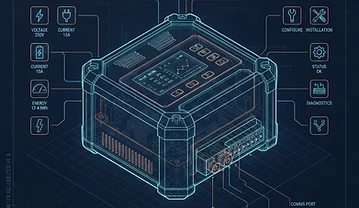
Designing Device Architecture That Survives Contact With the Field
A device that passes lab tests can still fail the estate. What 'field-survivable' really requires across power, comms and maintenance.
READ →

Battery Chemistry and the 15-Year Meter
The battery inside a smart meter has to outlast the contract, the technology cycle and often the customer. The chemistry chosen at spec stage echoes for fifteen years.
READ →

Firmware Over-the-Air: Managing Updates Across a Live Fleet
Managing firmware across a live fleet is an operational discipline, not a feature. A bad update at scale is a field programme; a good one is invisible.
READ →

Tamper Detection and Physical Security at the Device Level
Physical security at the device level is where revenue protection starts and where the cheapest intervention has the longest reach.
READ →GRID
10 BRIEFINGS
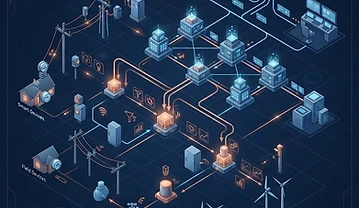
Edge Intelligence in Utility Networks
Moving processing closer to devices to improve performance, resilience and operational efficiency.
READ →
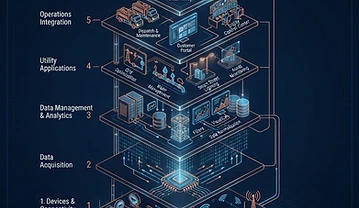
Building a Utility IoT Strategy Beyond Connectivity
Connectivity is only the first layer. Success requires data, applications, operations and governance working together.
READ →
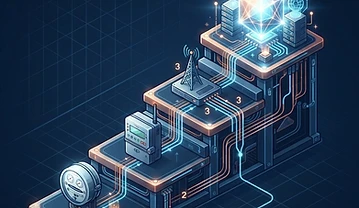
The Journey From Meter Reading to Grid Intelligence
How AMI evolves from a billing tool into a strategic asset for utilities.
READ →

Grid Device Enablement: When Telemetry Must Arrive on Time
For grid devices, a late read is a missed read. Determinism and bounded latency matter more than average throughput.
READ →
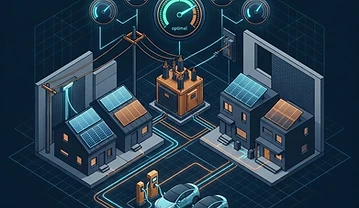
DER Hosting Capacity: Why Grid Planning Needs Better Data
Grid planning for distributed energy resources is a data problem before it's a connection problem. Better hosting-capacity data is what lets the network say yes safely.
READ →

Outage Detection and Restoration: What AMI Can (and Can't) Tell You
AMI can tell you a lot about an outage — and a lot it can't. Knowing the difference stops a metering system being asked to do a SCADA system's job.
READ →
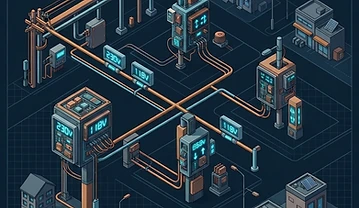
Voltage Monitoring at the Edge: Using Meter Data for Low-Voltage Network Visibility
Meter data turns the low-voltage network from a blind spot into a visible asset. Edge voltage monitoring is the cheapest grid visibility most utilities haven't switched on.
READ →

Build or Flex? Why Smart EV Charging Is Becoming Grid Infrastructure
Under Ofgem's ED3 price control, DNOs must evidence that flexibility couldn't resolve a constraint before they can reinforce. That single shift turns smart EV charging from optional add-on toward grid infrastructure.
READ →

From Plug-In Load to Grid Resource: Is V2G Finally Becoming Commercial?
V2G isn't one technology decision — it's a chain of them, and every link has to hold before the proposition becomes commercial rather than a pilot. Why fleets will get there before households.
READ →

The Solar-to-Wheels Microgrid
Solar, storage and chargers sharing a connection aren't a microgrid until an energy management system coordinates them. The timing problem is what makes or breaks the economics.
READ →SMART METERING
8 BRIEFINGS
The Hidden Cost of AMI Rollout Delays
Why project delays often cost significantly more than technology decisions.
READ →

Data Quality: The Foundation of Every Smart Metering Programme
Poor data quality undermines billing, forecasting and customer engagement initiatives.
READ →

Future-Proofing Smart Meter Investments
How to avoid technology lock-in and maintain flexibility throughout a 15–20-year asset lifecycle.
READ →

The Business Case for Meter Data Analytics
Turning smart meter data into operational, customer and revenue benefits.
READ →

Cybersecurity in Advanced Metering Infrastructure
Protecting critical infrastructure from device to cloud.
READ →

Why Interoperability Matters More Than Features
The most valuable solutions are often those that integrate seamlessly rather than offer the longest feature list.
READ →

Network Coverage Is Not Network Availability
Understanding the difference between signal strength, service availability and operational performance.
READ →

Scaling from 10,000 to 10 Million Devices
Architectural considerations that become critical as smart metering programmes grow.
READ →